
Nexus: The Next Level of Test Management for Jira
Nexus: The Next Level of Test Management for Jira
Nexus: The Next Level of Test Management for Jira
Jira is very good at tracking work. It was not built to track testing. Out of the box it has no concept of a test case, a test cycle or a test run, and no way to say which requirements have been tested, against which build, in which environment, with which data.
So teams fill the gap with spreadsheets, a second tool with its own logins, or a pile of Jira tickets standing in for tests. Nexus is test management built into Jira Cloud. It adds the missing pieces as real Jira issues, with the workflows, permissions and JQL your team already uses. The goal is simple: when someone asks whether you are ready to release, the answer is a record, not a conversation.
What Jira leaves you without
No test repository. Test cases end up in spreadsheets or a separate tool, with a second set of permissions and a second place to look.
No line from requirement to result. Jira can link a story to a bug. It cannot tell you which stories have no tests, or which have tests that last passed against an old build.
No record of a test run. Who ran which step, what happened, what evidence was captured, and which defect came out of it.
No sense of environment or time. A result carries no build or environment, so nothing marks it stale when a new deployment lands.
No control over test data. Datasets live in shared files that anyone can edit, and nobody can say which version a failing test used.
No review step for AI. AI is useful for drafting tests. Output pasted into Jira from a chat window has no approval trail and no link back to the requirement it came from.
What Nexus adds
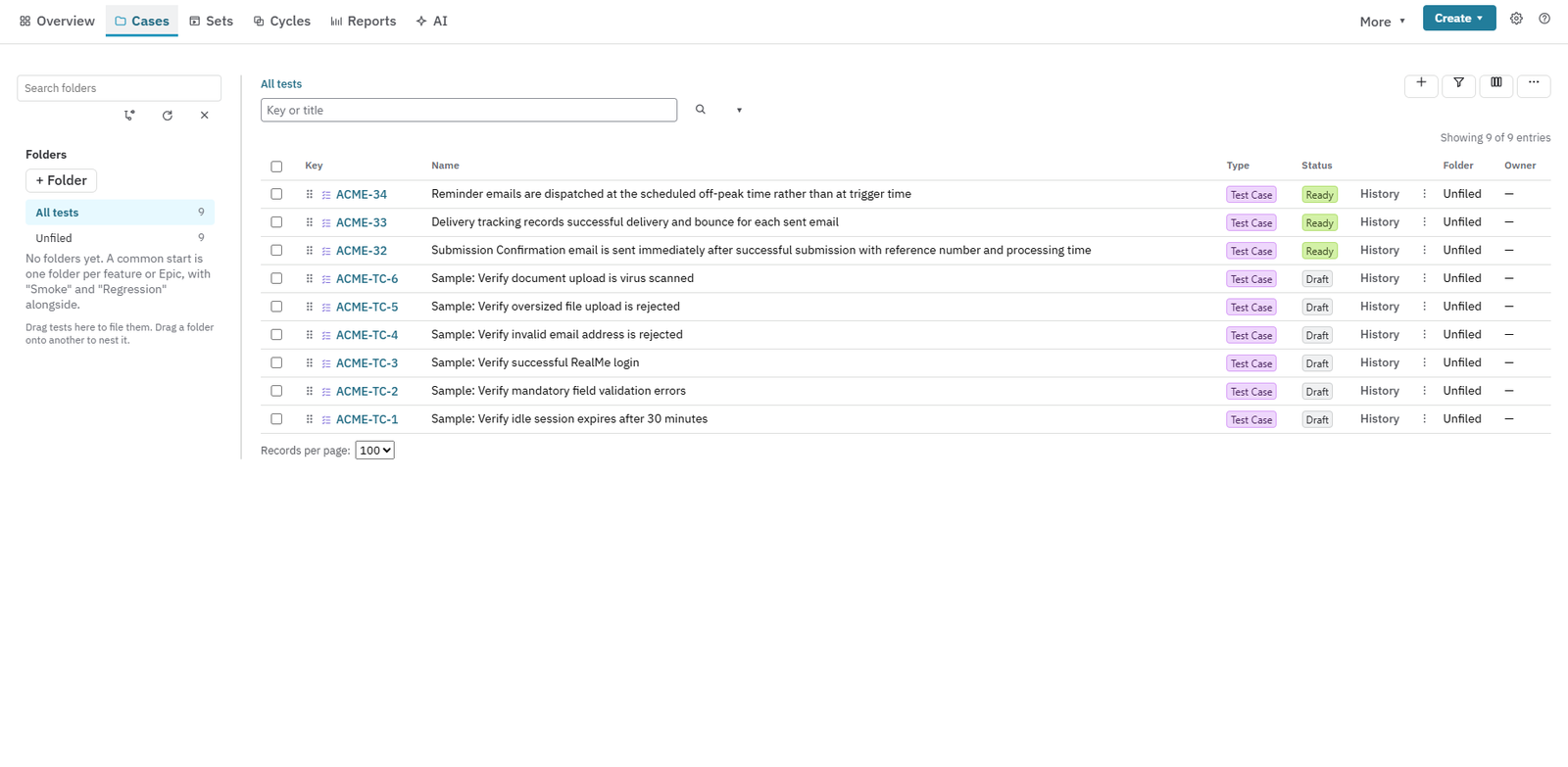
Tests are Jira issues, not records in a side system. Test Cases, Test Sets and Test Executions are native Jira issue types, organised in folders, linked with ordinary issue links and searchable with JQL. Permissions, workflows, boards and dashboards apply without extra work, and you can export to CSV, JSON or Cucumber .feature files whenever you like.
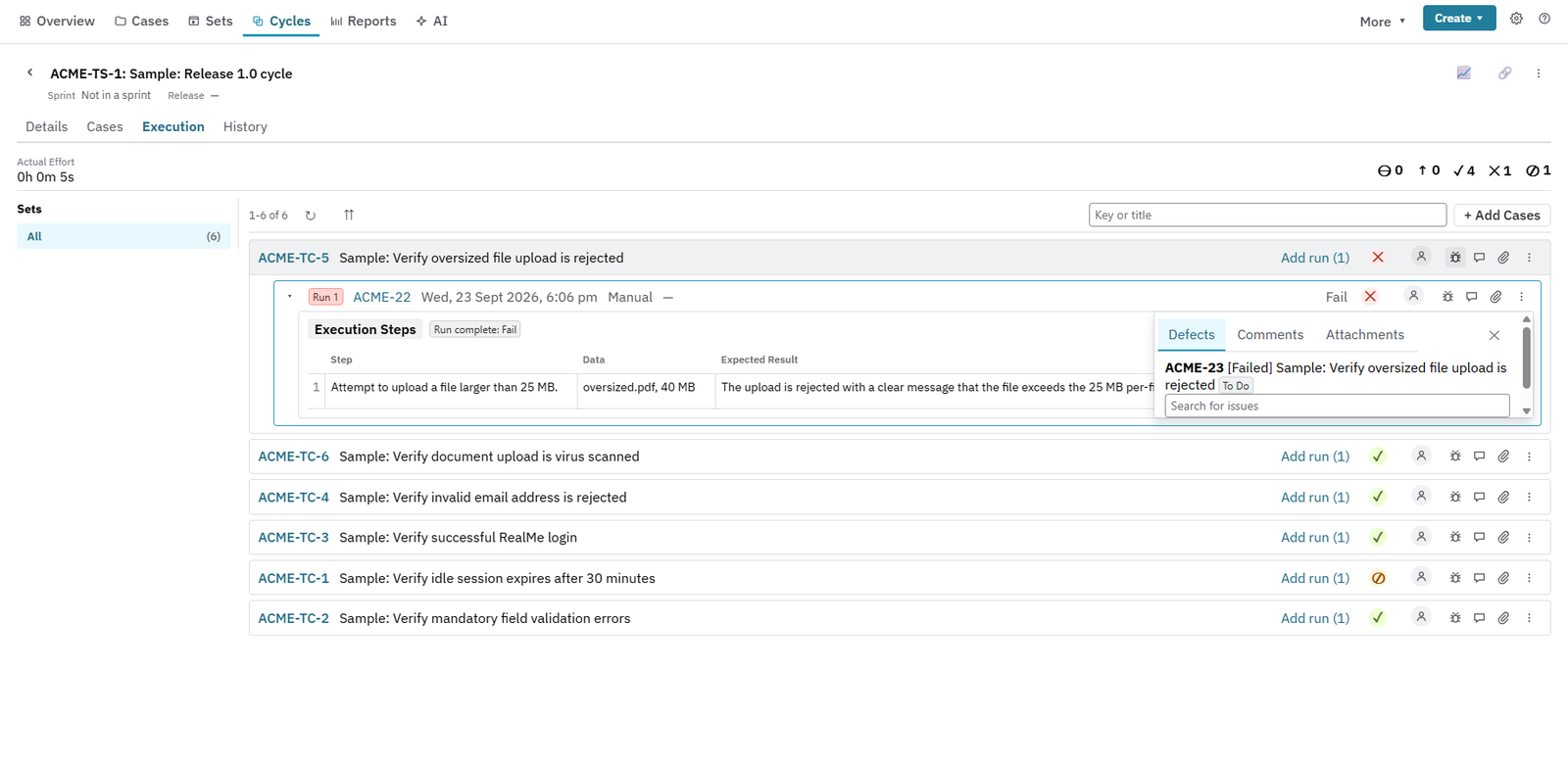
Run the test and raise the defect in one place. The manual runner walks each step and captures evidence against it. A failed step can raise a Bug linked to the run, the test case and the requirement. Cycles are planned from reusable test sets, with progress tracked and estimated effort compared with actual.
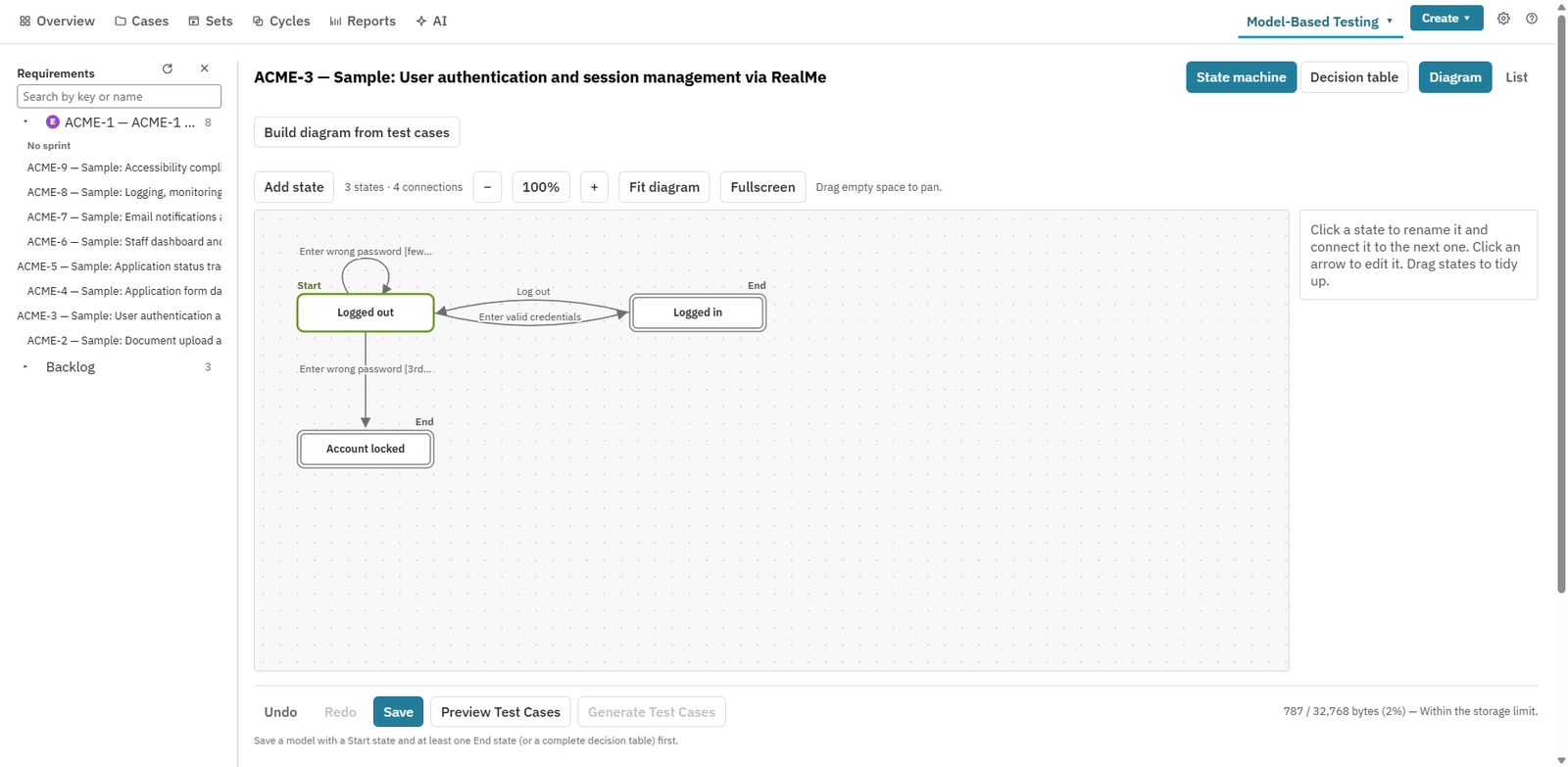
Design tests the way your team works. Step-based tests with preconditions and inline images, Gherkin, data-driven tests where each dataset row becomes an iteration, and shared steps that call another test case. Model-based testing turns state machines and decision tables into ordinary test cases, with no AI involved.
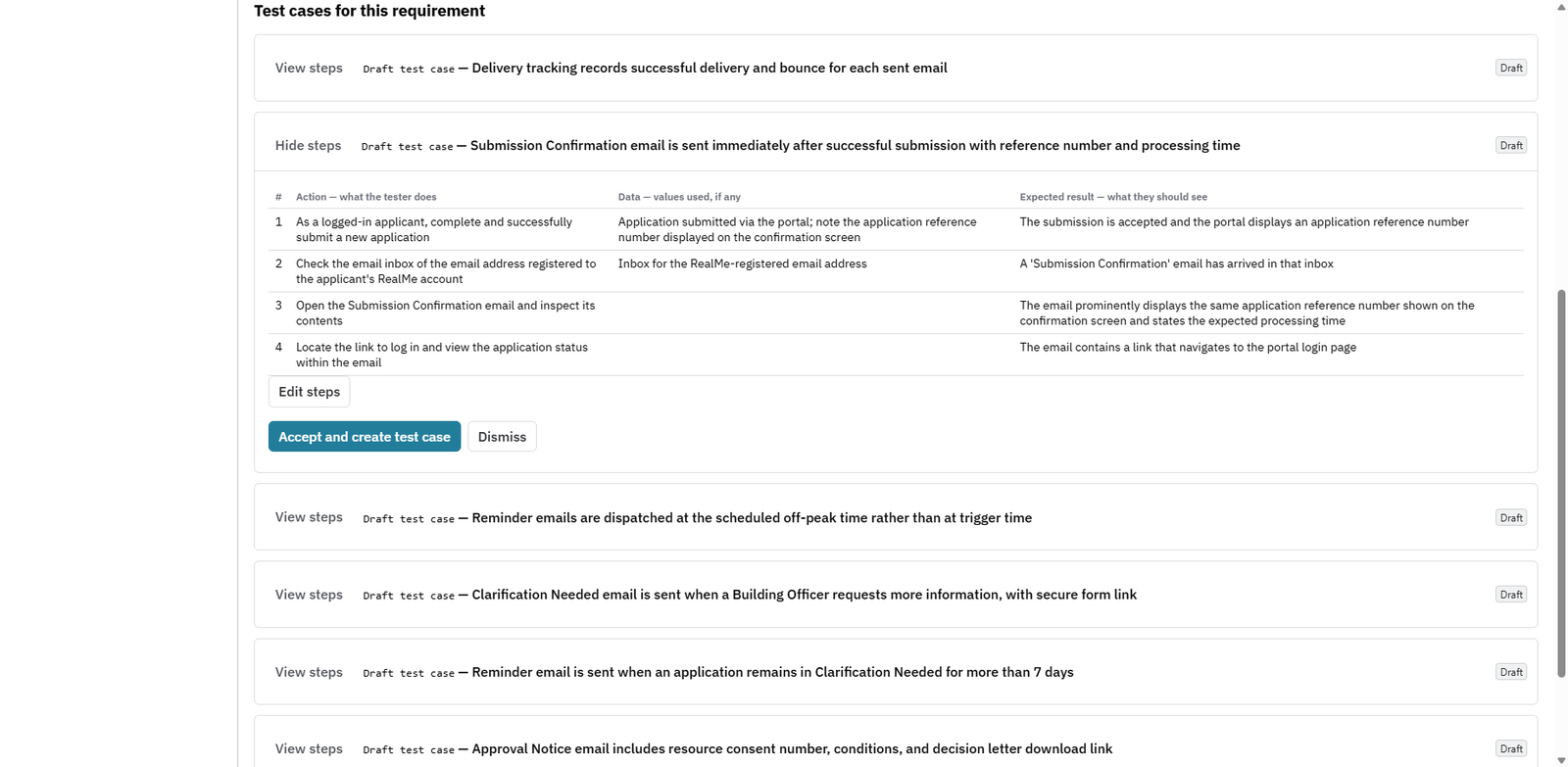
AI drafts. People decide. Nexus analyses a requirement for ambiguity, gaps and contradictions, then drafts tests from the findings. A person accepts, edits or dismisses each one, and only accepted drafts become Jira Test Cases. AI runs on your organisation’s own AI account. Until an administrator connects one, Nexus uses no AI and every other feature works as normal.
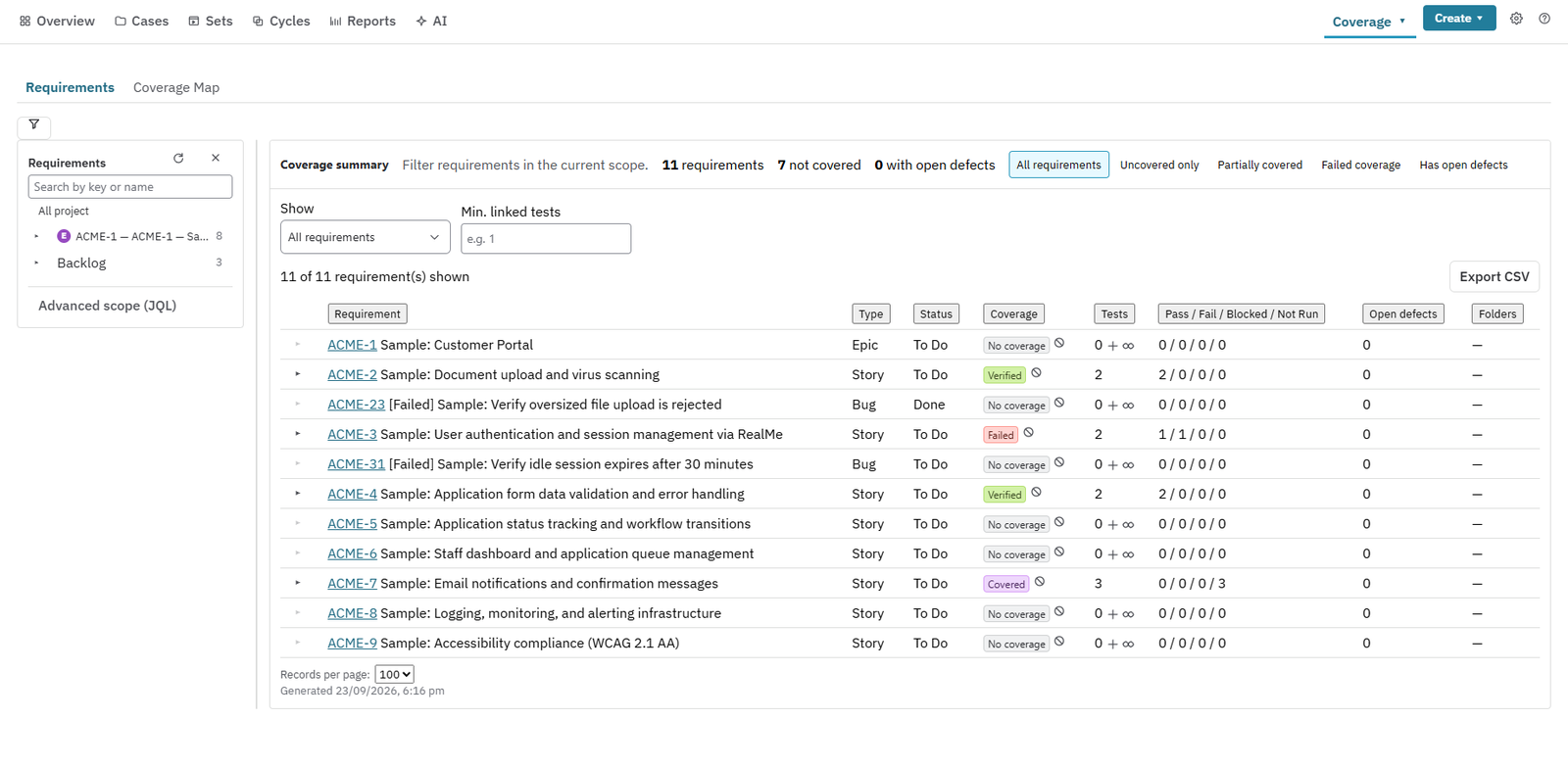
Coverage you can show an auditor. The coverage view lists every requirement as covered, partly covered, failing or untested, with the linked tests, latest results and open defects behind each status. A Quality Score with a published formula, dashboard gadgets and JQL functions such as testsOf and requirementsOf let you build your own boards on top.
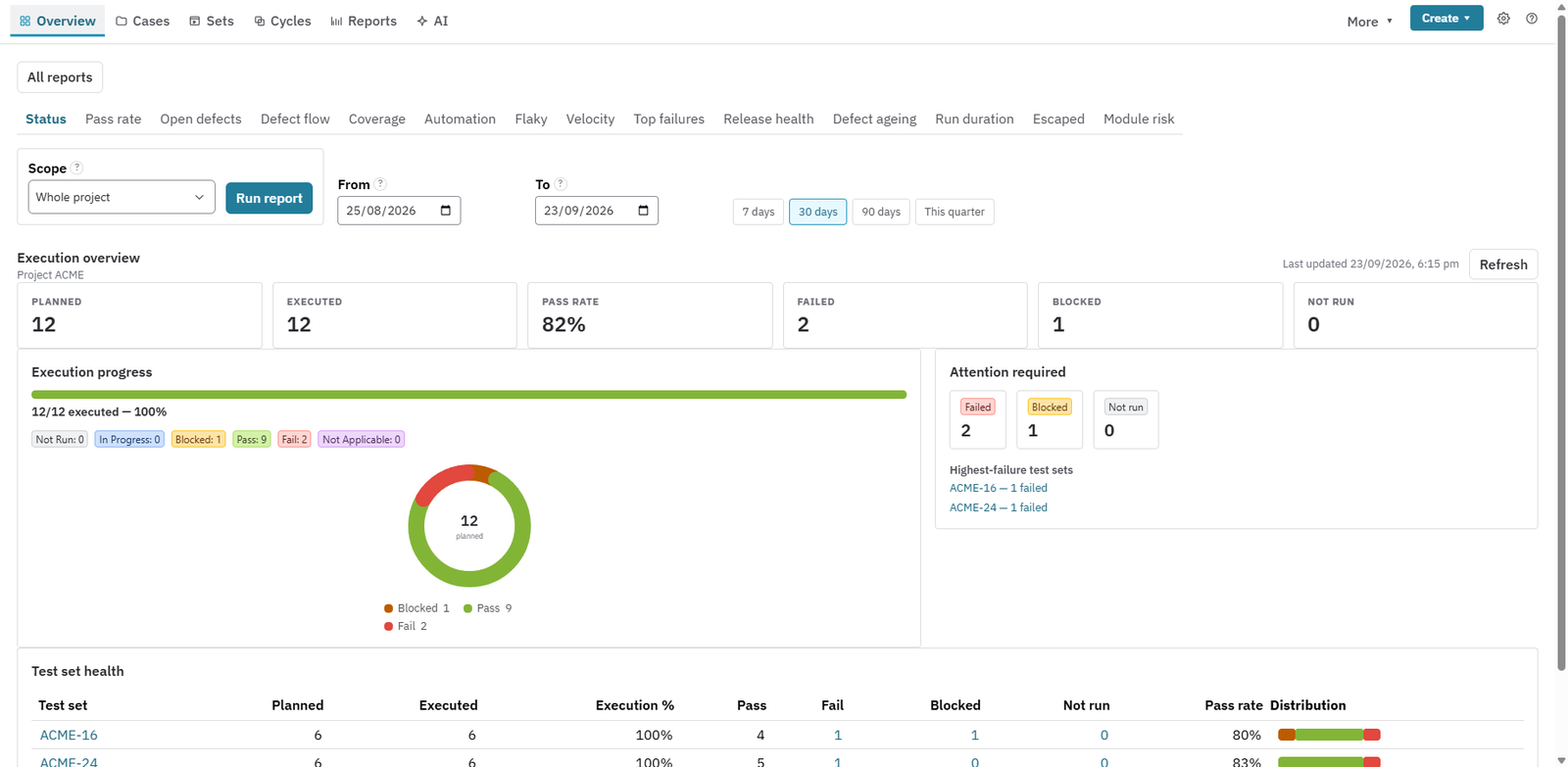
Evidence that knows when it is stale. Nexus tracks environments and deployments, so a newer deployment marks earlier results as stale. Readiness gates and a “can we release?” view bring coverage, current results and open defects together before a person records the sign-off.
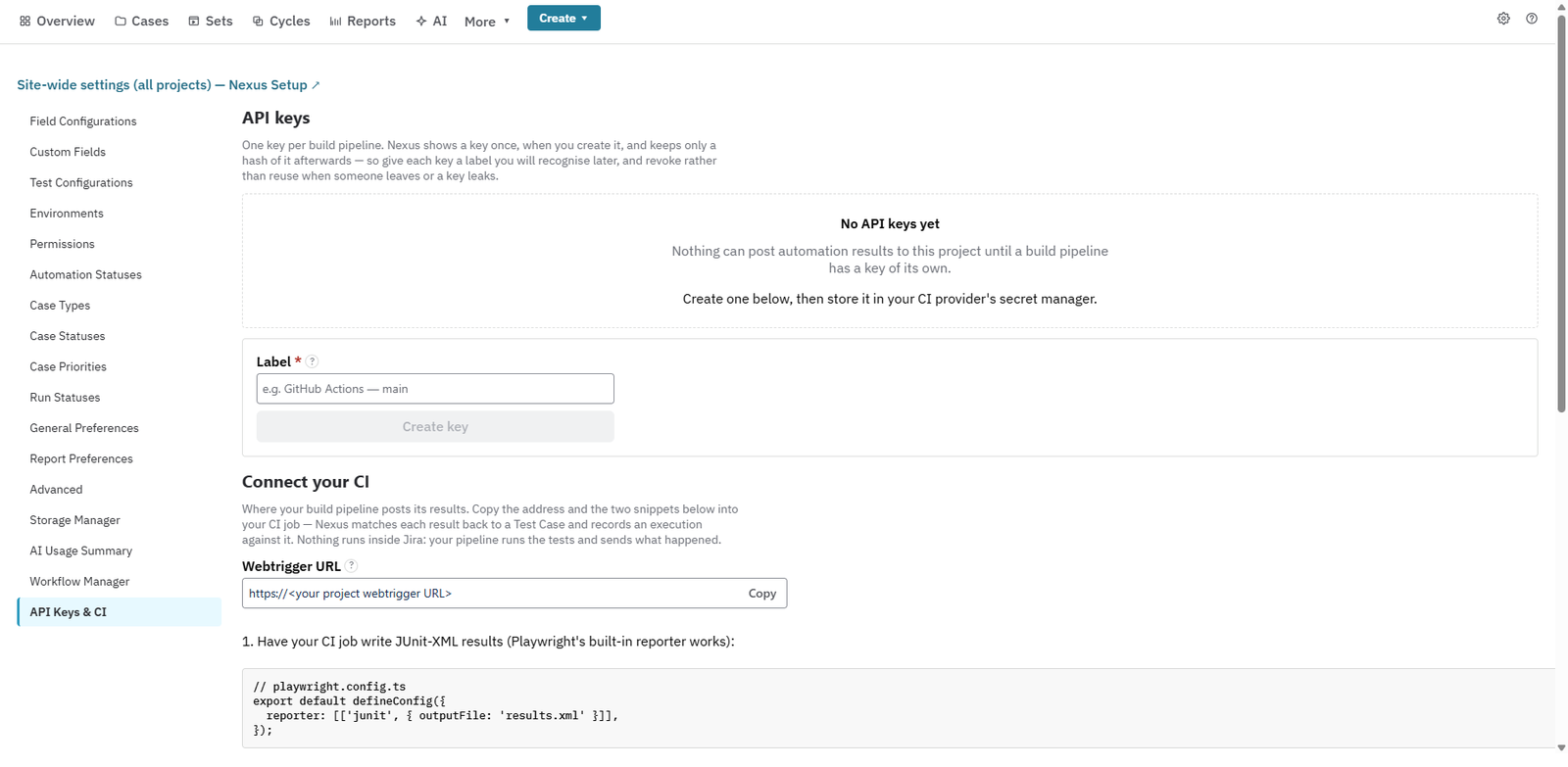
Automation results in the same record. Each project gets one authenticated endpoint for results from JUnit XML, Cucumber JSON, Playwright JSON and other supported formats, with connections for GitHub Actions, GitLab CI, Azure Pipelines, Jenkins and Bitbucket Pipelines. Your tests run in your own infrastructure. Nexus records what they found.
Test data you can trace. Datasets are versioned, classified and reserved, and every execution stays linked to the inputs it used. A personal-data scanner flags real personal information before it ends up in a test.
Why this is the next level
Counting tests was the old job. A pass rate says how many tests passed, and nothing about whether the evidence is current, which environment it came from or what the sign-off rested on. Nexus keeps requirement, test, run, environment, data and decision connected in the one place your team already works.
It also keeps people in charge. AI suggests, your team reviews, and release approval is always a human action. We wrote about why that matters in A Green Test Count Is Not a Release Decision.
Where it stands
Nexus is one edition with everything included, set up through a guided Setup page that creates the issue types, workflows and guard rules for company-managed and team-managed projects. Test cases from your current tool can be brought in from a CSV export. Nexus is being prepared for the Atlassian Marketplace. The product guide and the full feature list are at nexus.resync.nz.
Nexus is a Resync Labs product.